


Strapflow Performance Nasal Strips — The Champion's Breath
Built for athletes, biohackers, and anyone tired of mouth-breathing through life.
James Nestor's Breath (NYT bestseller, 3 million copies) made the case in 2020. Patrick McKeown's The Oxygen Advantage updated the Buteyko Method for modern athletes. The conclusion is uncomfortable: most of us breathe through our mouth far more than we should — during the day, during training, and especially during sleep — and we pay for it in lower energy, slower recovery, and unrealized performance.
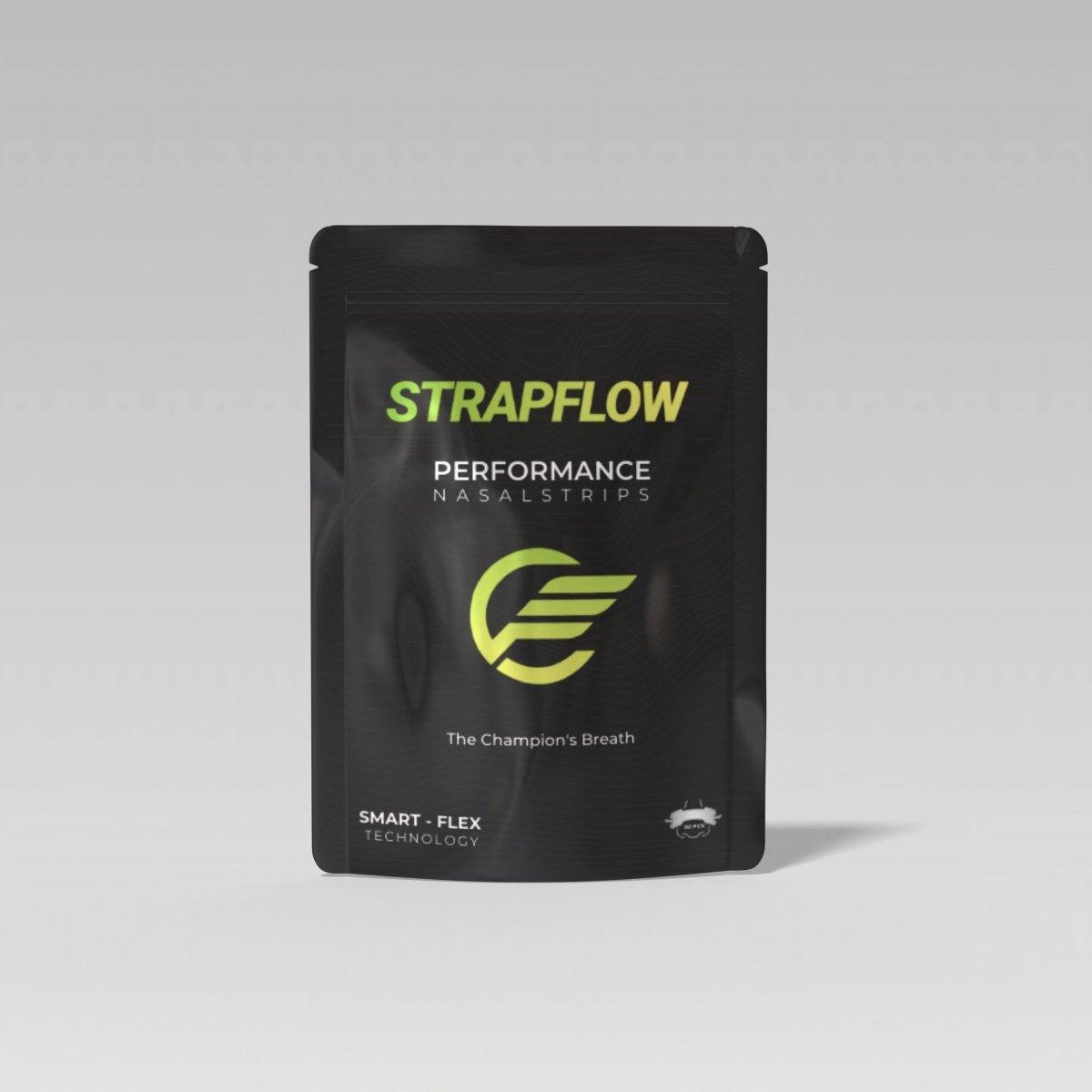
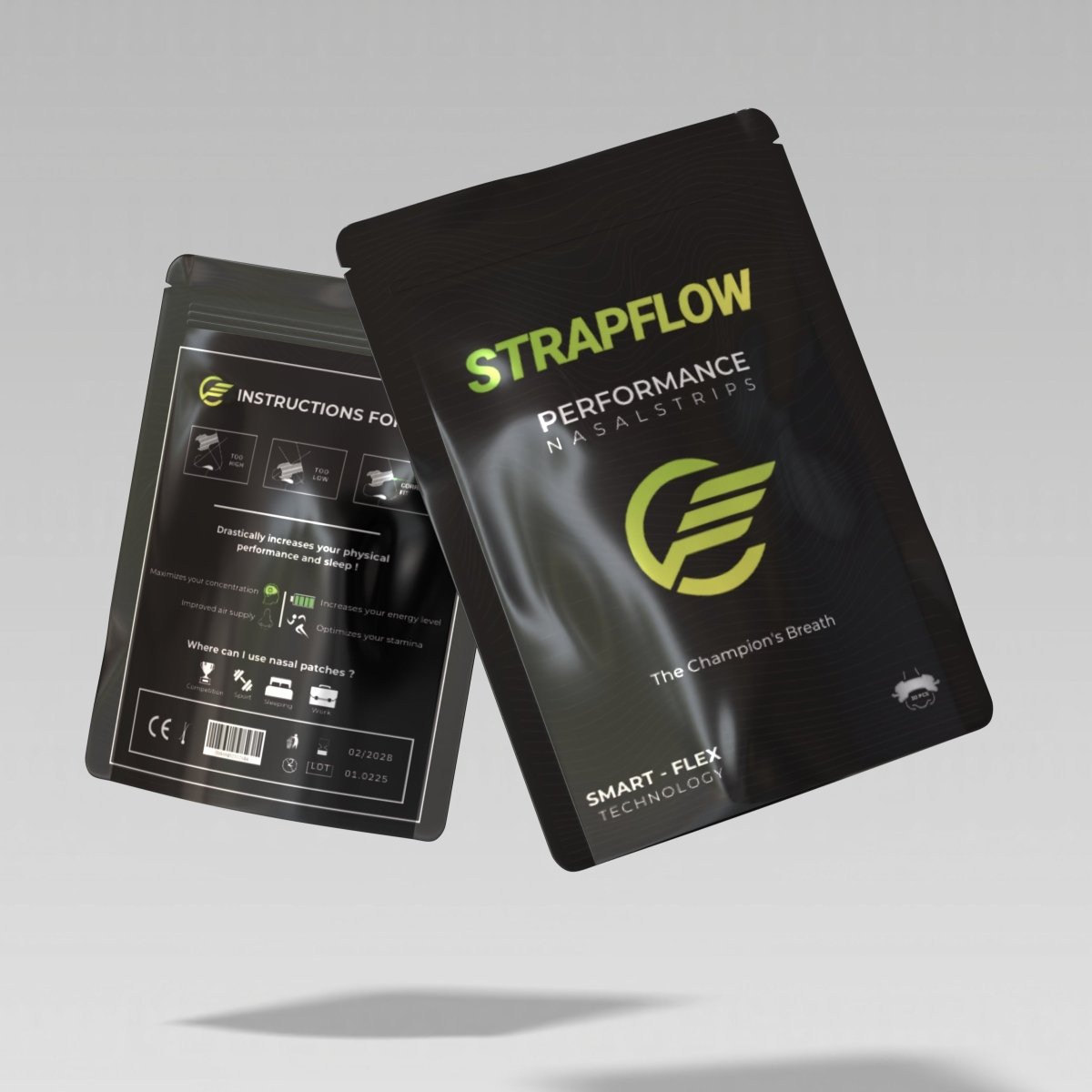
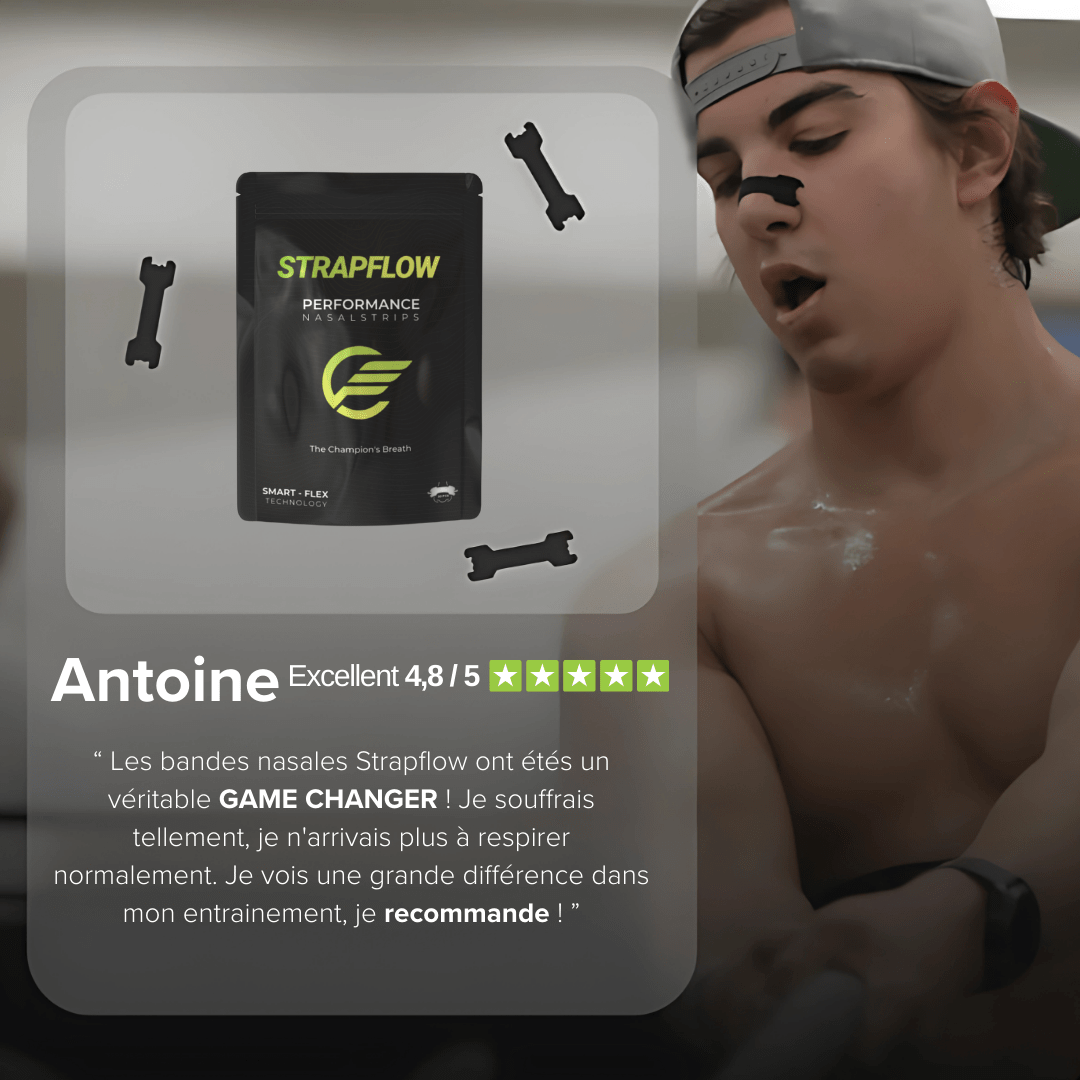
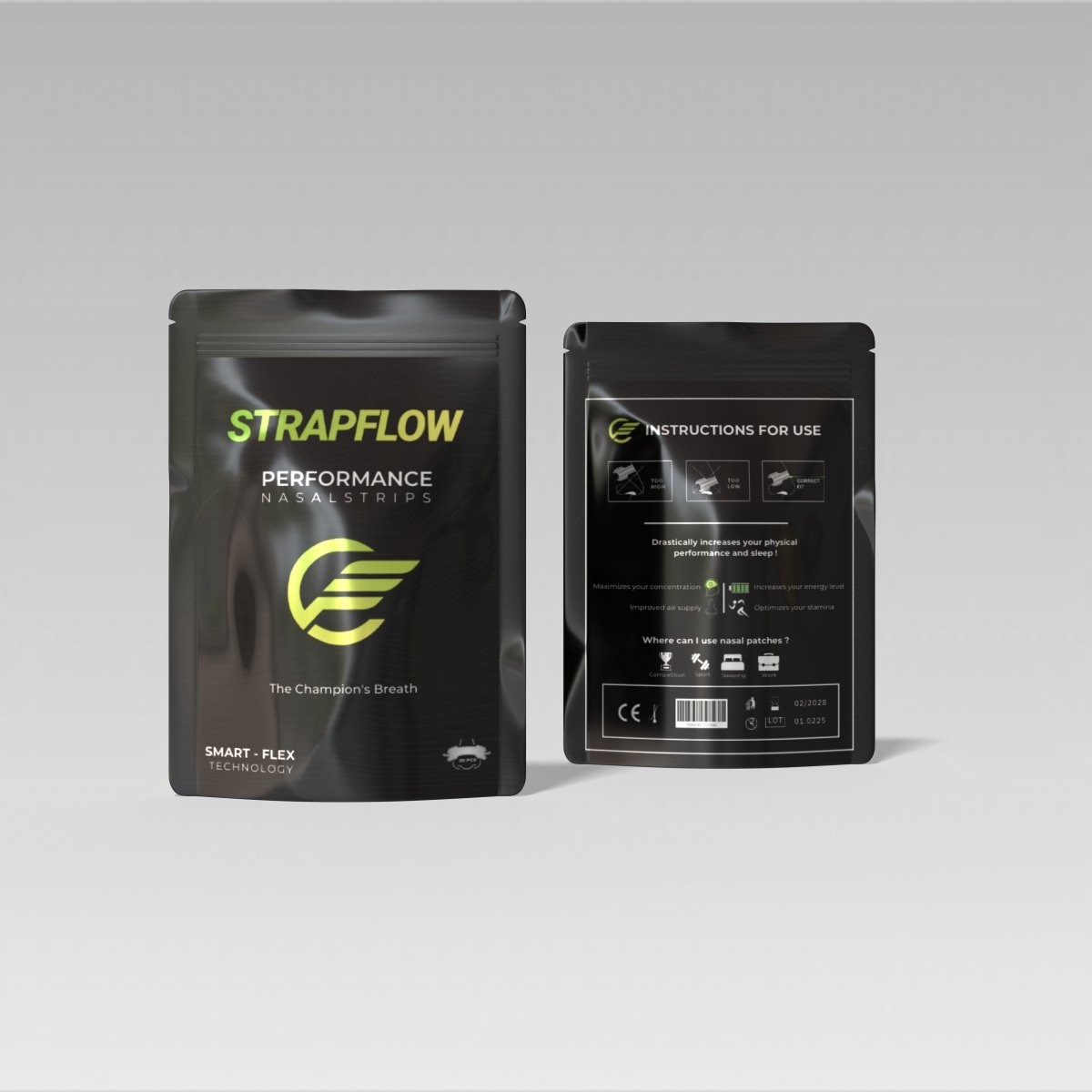
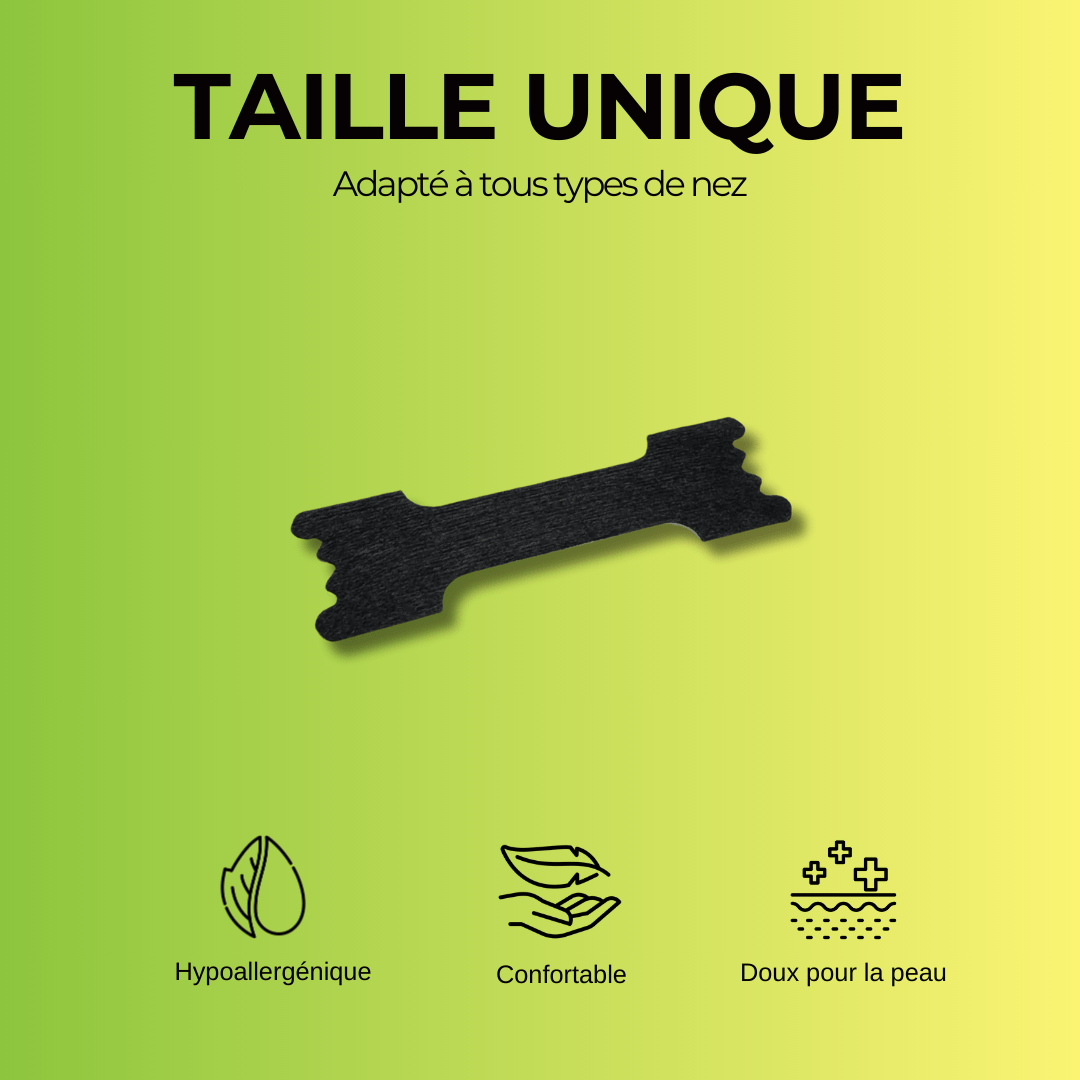
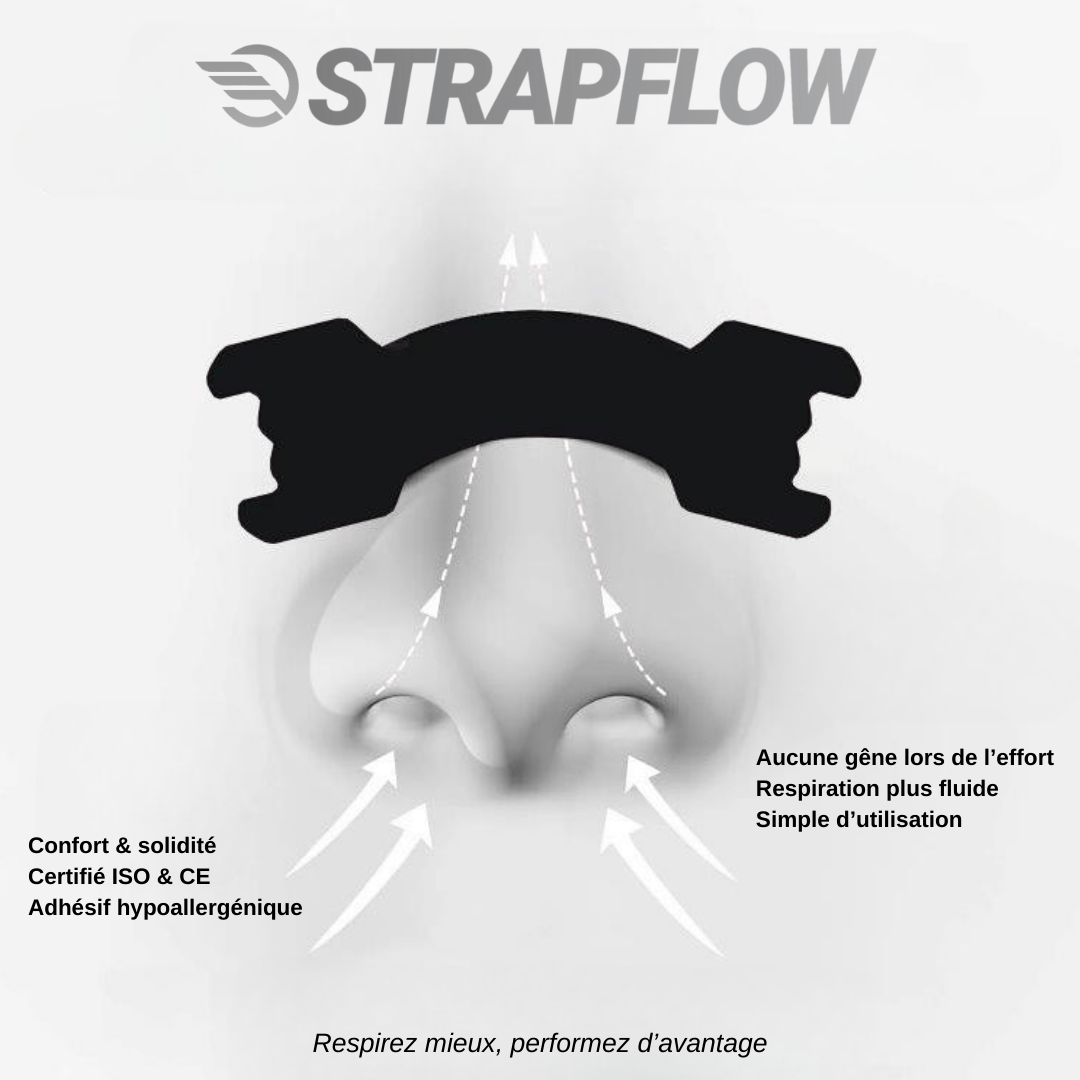
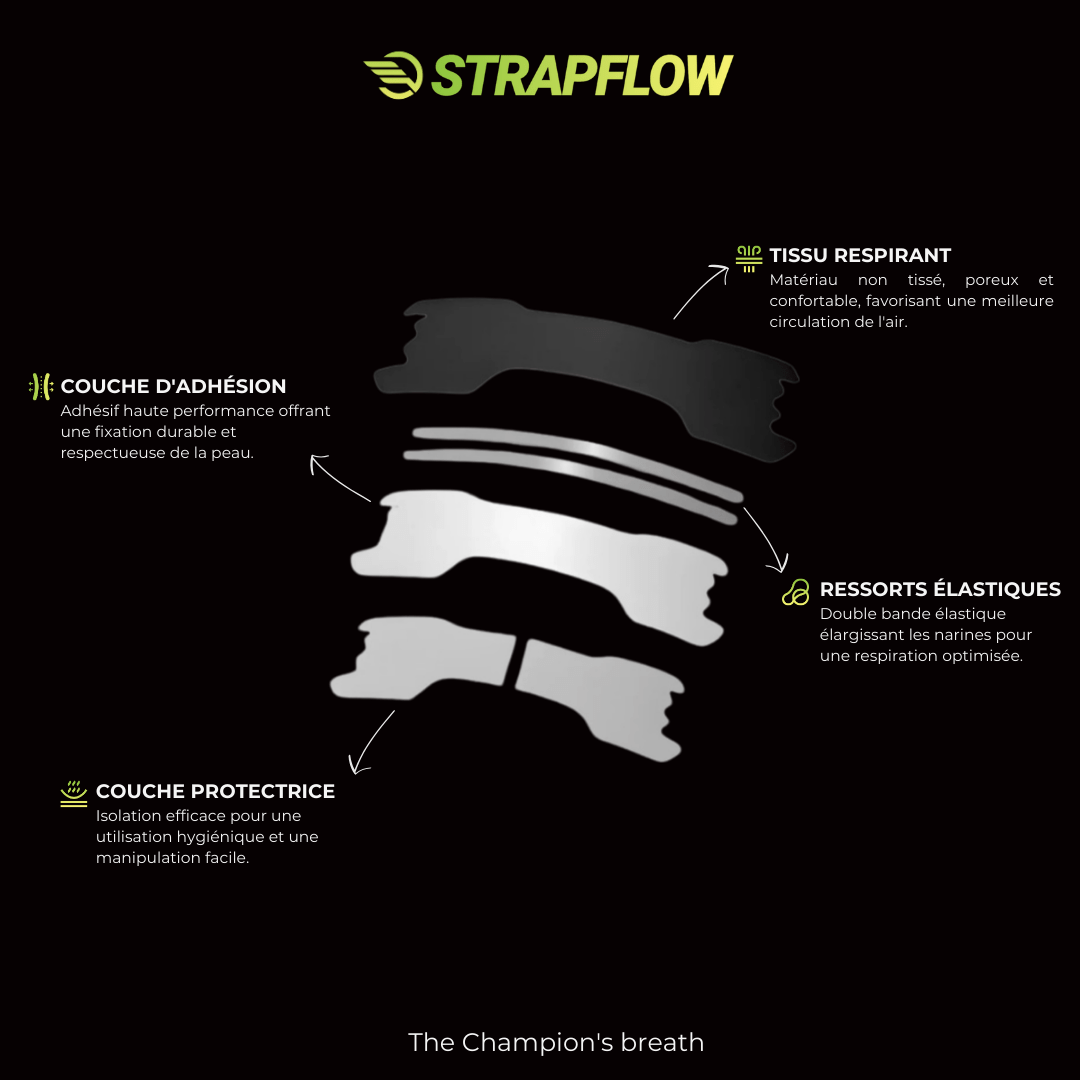
Strapflow is the smallest possible mechanical fix. A black, dog-bone–shaped strip that gently widens your nasal passages. Engineered Flex-band technology. Hypoallergenic adhesive that holds for 12 hours and lifts cleanly. Designed in the US, built for actual training.
Endurance athlete? We built you the full 8-week protocol.
Based on the Buteyko Method and Patrick McKeown's Oxygen Advantage. Free, no email gate, includes the BOLT score test and week-by-week progressions. Read the protocol →
What you'll feel
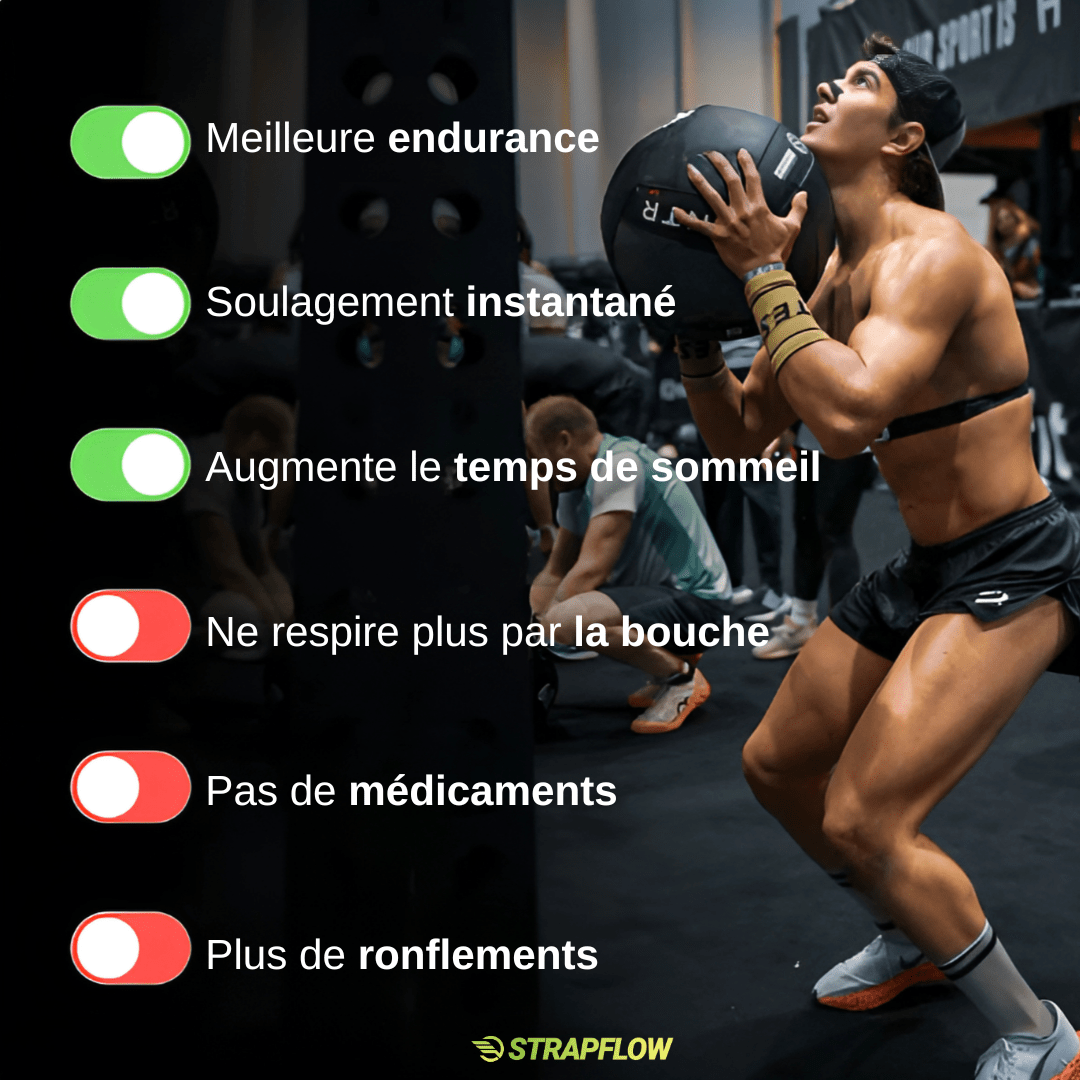
- Deeper sleep — fewer 3am wakeups, less morning brain fog
- Lower easy-run heart rate — measurable within 2–4 weeks
- Higher HRV — visible in Whoop, Oura, Garmin within the first 7 days
- Better recovery between sets — nasal-only between lifting sets accelerates HR return
- A subtle warm-headed feeling after 5 minutes of slow nasal breathing — that's CO₂-induced cerebral vasodilation. Read the science →
The protocol most people miss
Inhale through your nose for 4 seconds. Exhale slowly through your nose for 8 seconds. Repeat for 5 minutes. This is the vagus-nerve reset Nestor and McKeown both teach. It works without a strip. It works dramatically better with one.
Four reasons nasal breathing wins
- Nitric oxide: Your nose produces up to 6× more nitric oxide than your mouth. NO opens blood vessels and delivers oxygen to your muscles. Mouth-breathers leave that on the table.
- CO₂ tolerance: Nasal breathing trains your body to tolerate higher CO₂ levels, which translates directly to a lower heart rate at the same pace.
- Cerebral blood flow: Higher blood CO₂ dilates cerebral arteries. More blood to the brain, mild euphoria, clearer thinking. Full science →
- Recovery and sleep: Better breathing during sleep means better heart rate variability, which means faster recovery and a clearer head by 10am.
What's in the pack
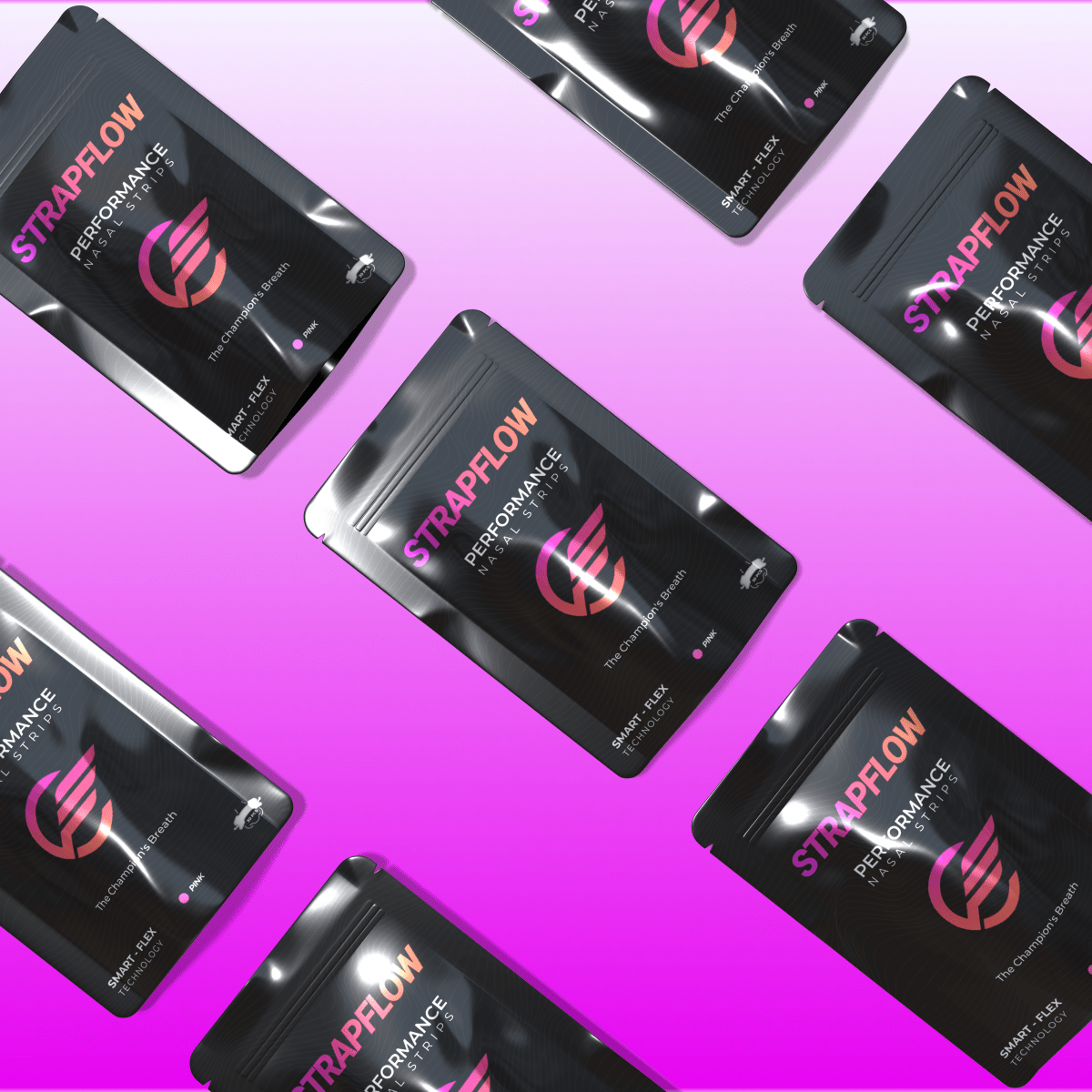
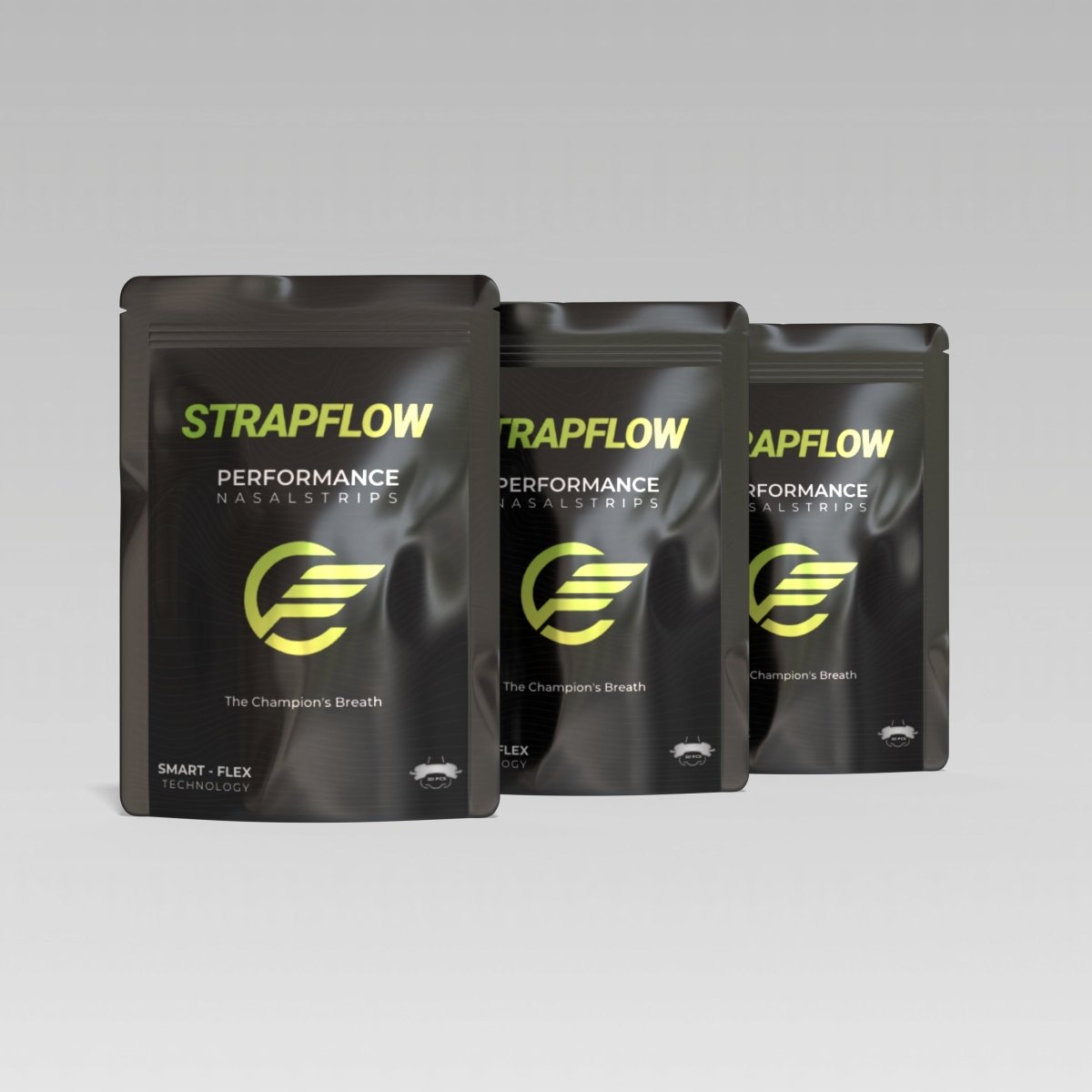
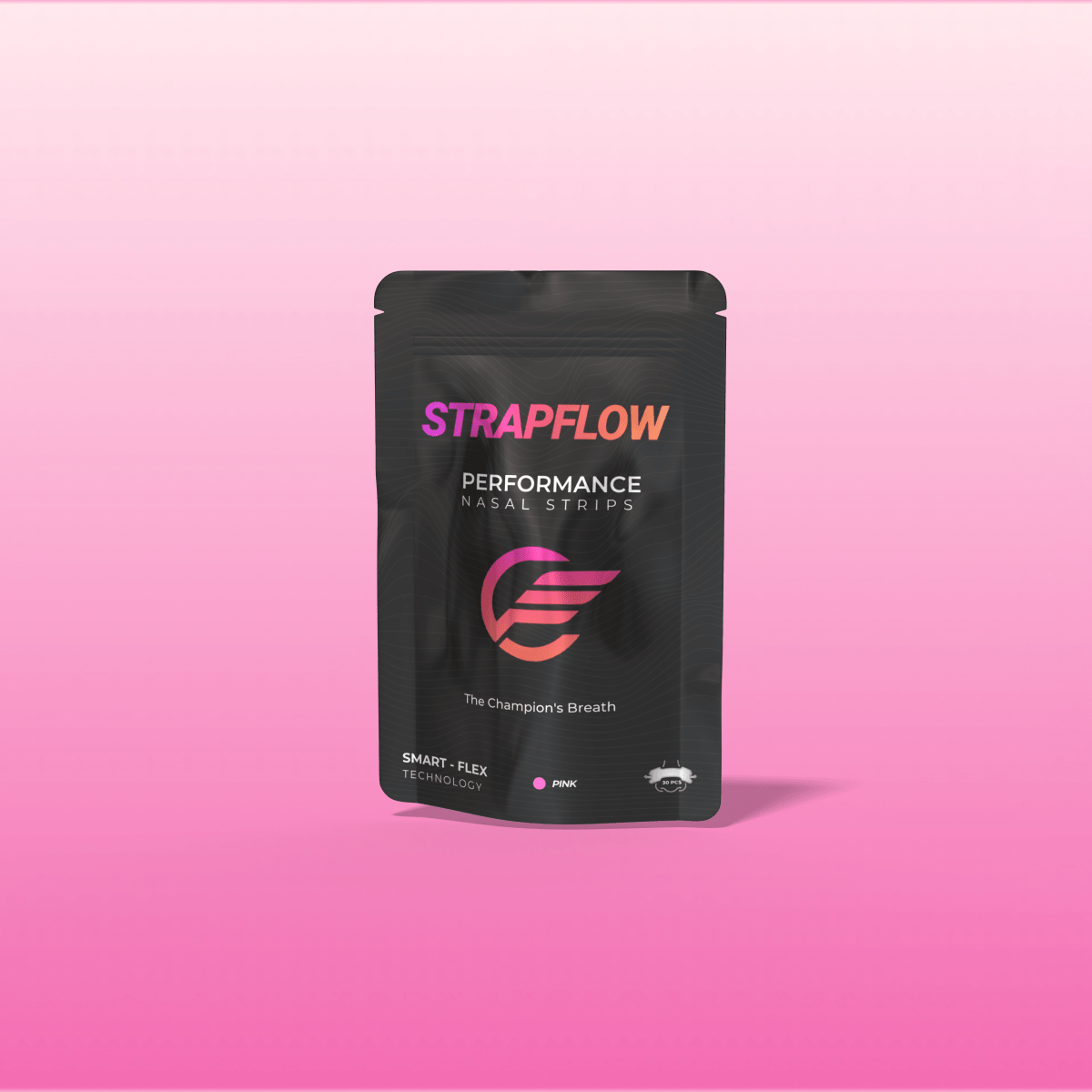
30 strips. Black. Smart-Flex Technology. One pack equals one month at one strip per night.
How to apply
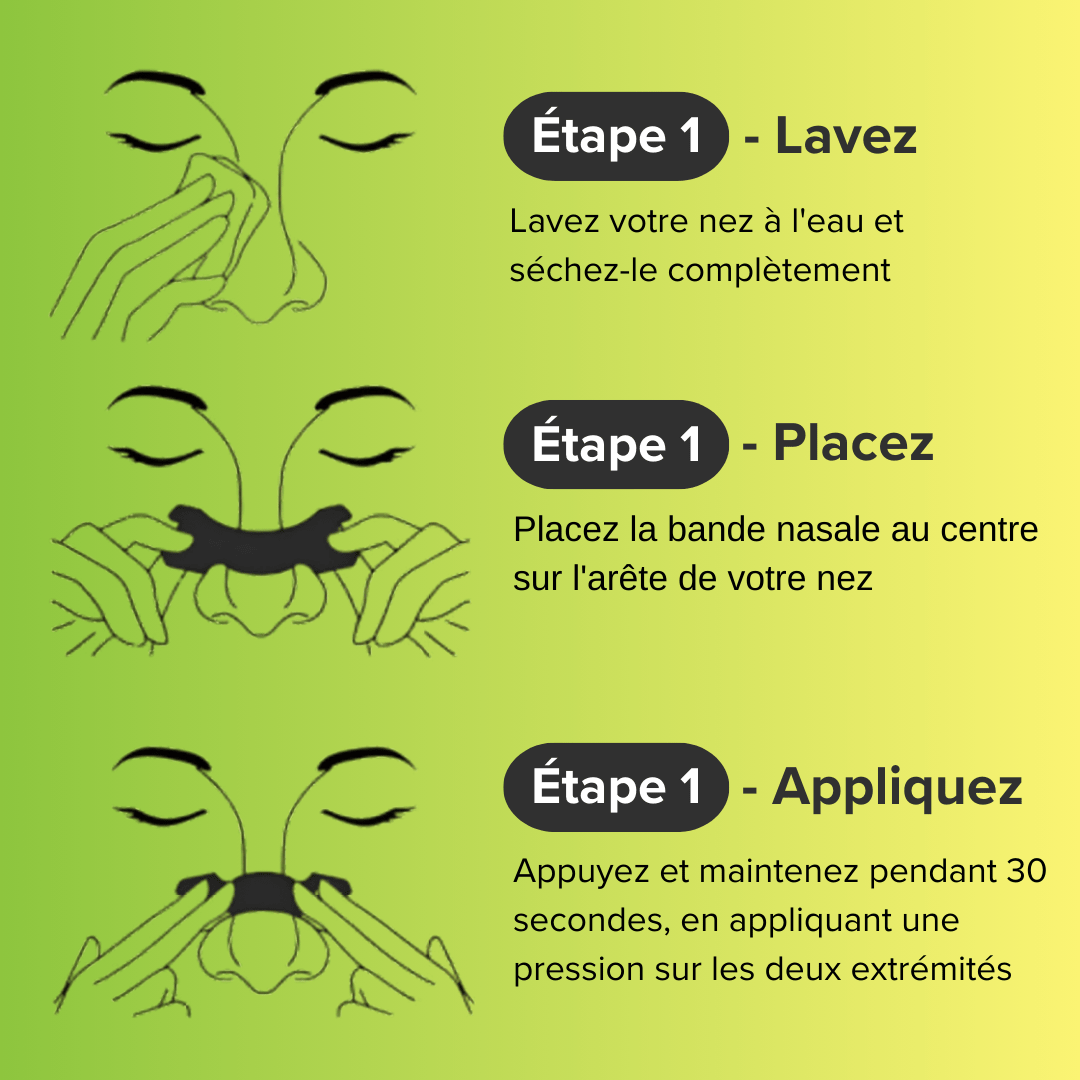
- Clean and dry the bridge of your nose
- Peel the strip
- Press across the bridge with the dog-bone ends sitting over each nostril
- Press for 15 seconds — the adhesive activates with skin warmth
- Leave on overnight, or for the duration of training
Risk reversal
30-night money-back guarantee. Try a full pack for a month. If your mornings aren't different, full refund.
FAQ
Are they comfortable?
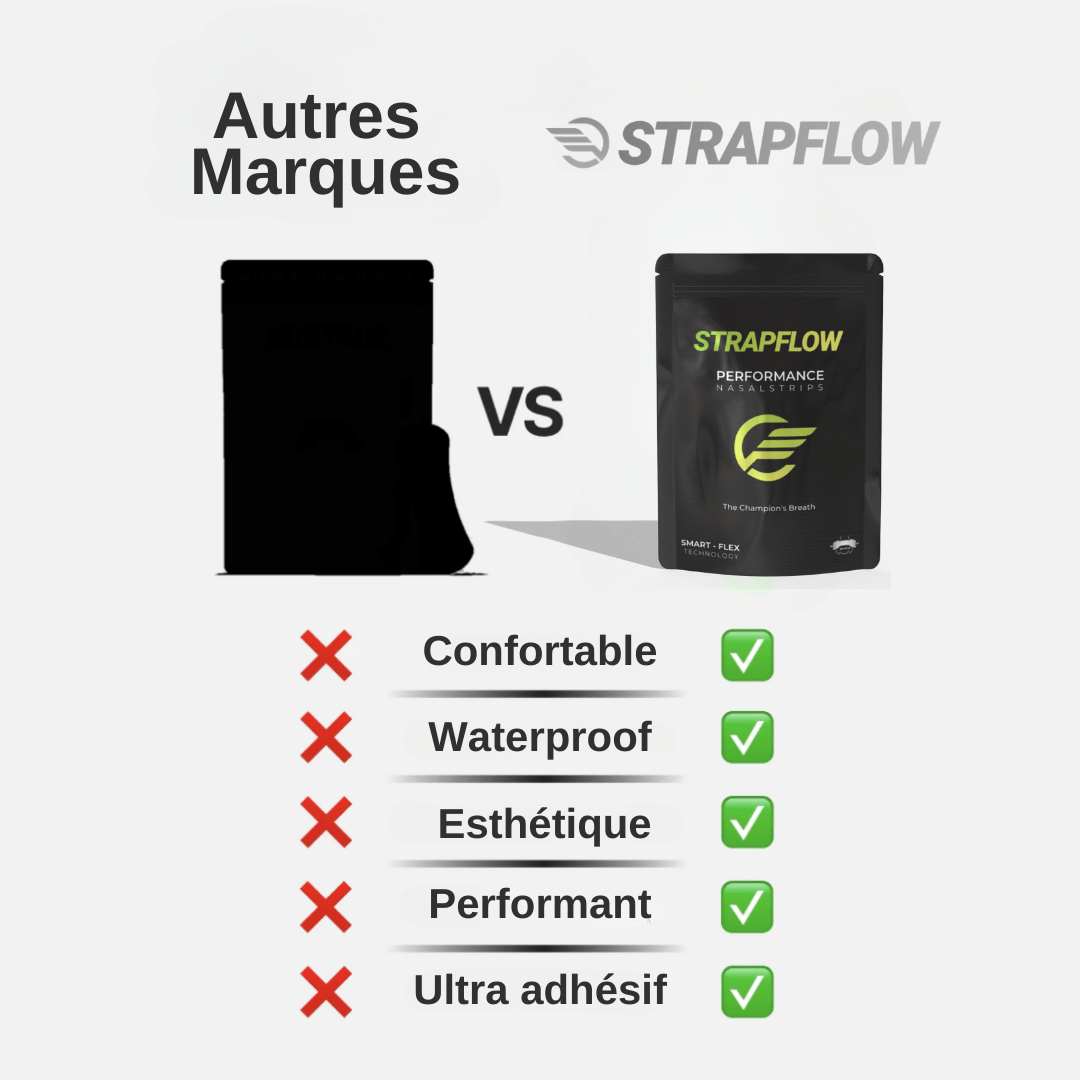
Yes. Hypoallergenic, skin-safe adhesive designed for 12-hour wear. Most users report forgetting they have one on within minutes. The dog-bone shape sits flat across the bridge of the nose, so it doesn't catch on helmets, headbands, or pillows.
Can I use them during exercise? What's the right protocol?
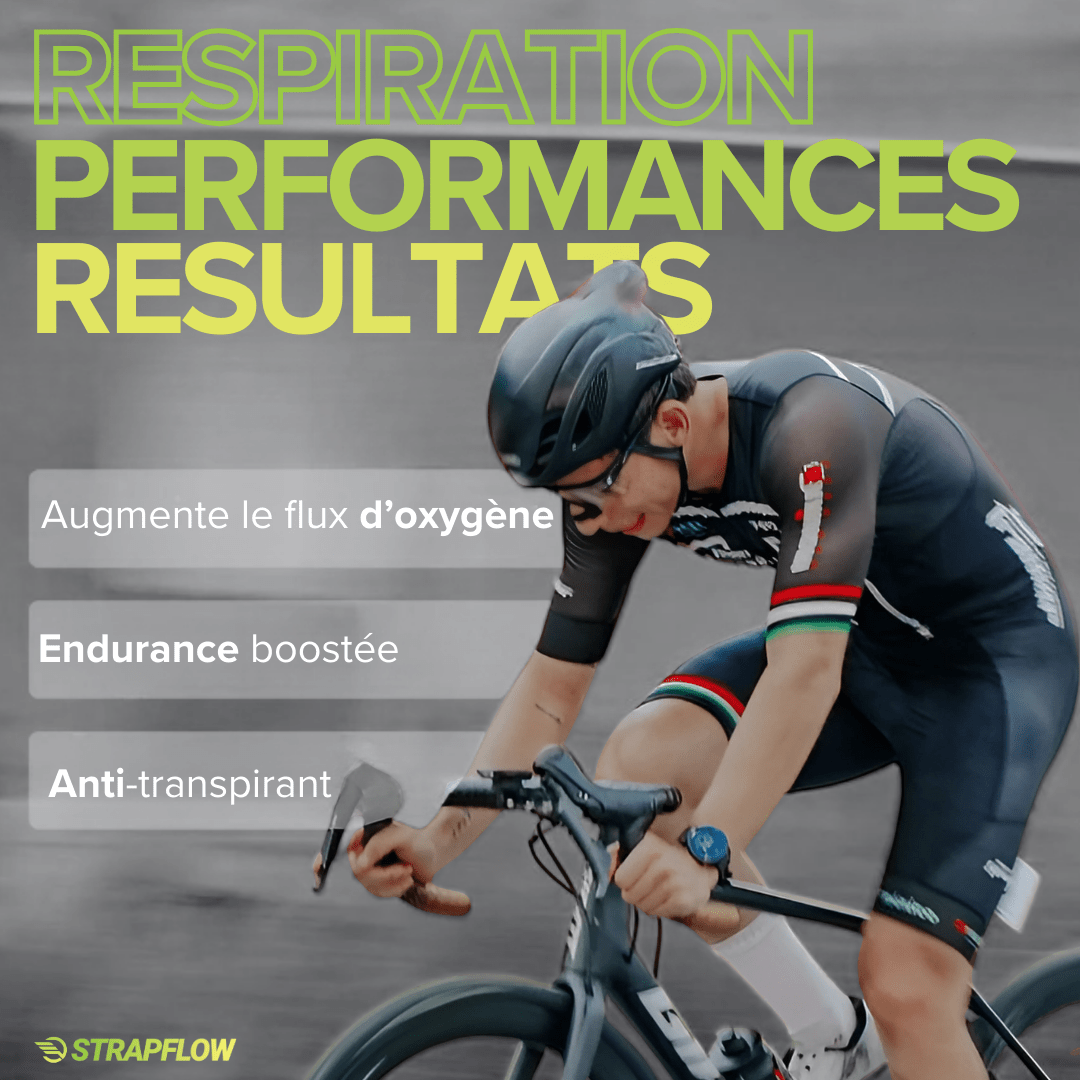
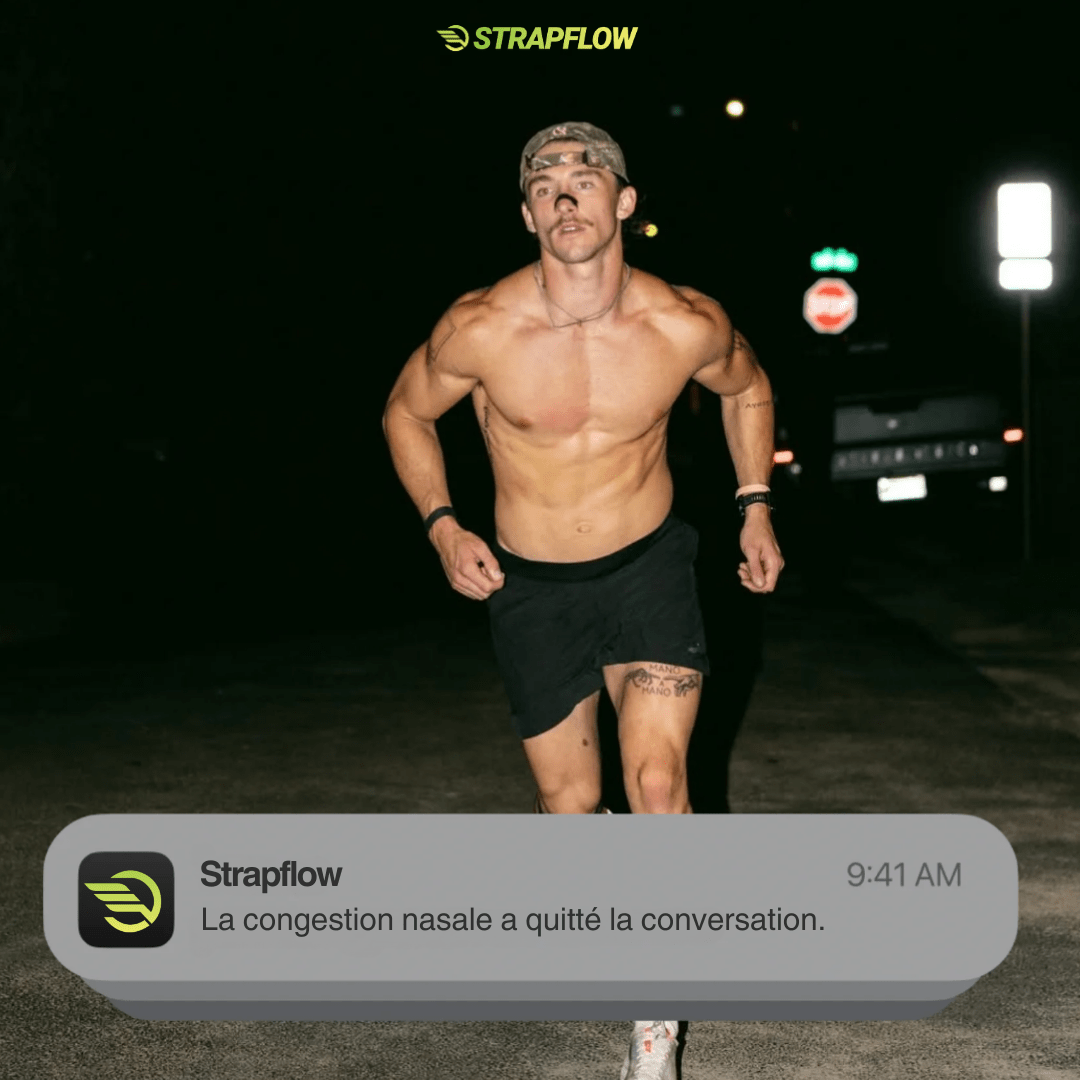
Yes — that's the use case they were built for. Sweat-resistant adhesive, wears under helmets, headbands, and goggles.
The protocol that actually works:
- Start with a 5-minute nasal-only warm-up walk. Apply the strip, close your mouth, and walk at conversational pace. Your nose will feel "small." That's CO₂ tolerance adapting.
- Transition to nasal-only Zone 2 work. If you can't sustain nasal breathing at your easy pace, you're running too hard for Zone 2 — slow down. This is the training stimulus.
- What you'll feel: First week, your easy pace will drop noticeably and feel weirdly slow. Don't fight it. Week 3 is when adaptation kicks in and pace returns at a lower heart rate.
- For hard efforts: use nasal-in / mouth-out as a hybrid. Pure nasal at threshold is for the few. Hybrid is achievable for most.
Full 8-week progression, BOLT score test, and the five common mistakes: The Runner's Nasal Breathing Protocol →
What if I have allergies or chronic congestion?
Mild allergies are fine — Strapflow physically holds the airway open, which actually helps because a stuffy nose is often a sign of low CO₂ tolerance (a self-perpetuating loop). Severe chronic congestion or anatomical issues (deviated septum, polyps): consult an ENT first.
How long until I notice a difference?
Sleep changes are usually night 1–3. HRV changes show in week 1 on Whoop/Oura/Garmin. Run-pace changes show in weeks 4–6 if you're following the nasal-only training protocol.
The cleanest way to track your progress is the BOLT score test (Body Oxygen Level Test). Retest every 2 weeks. A 5-second improvement is significant; a 10-second improvement is transformational. Full BOLT score instructions →
Will it stay on overnight?
Yes. Designed for 12-hour hold through movement, sweat, and side-sleeping. The single highest-leverage use case for Strapflow is nightly sleep wear — 8 hours of nasal breathing every night raises baseline cerebral blood flow more than any nootropic, supplement, or biohack on the market. Why sleep is the unlock →
Why is the strip black instead of clear or beige?
Because beige nasal strips look like a medical device. Black strips look like part of an athlete's kit. Same function. Different signal.
Are these the same as Hostage Tape?
No. Hostage Tape is mouth tape — it forces nasal breathing by sealing your mouth shut. Strapflow is the complement: it opens your nasal airway so nasal breathing is physically easier and more sustainable. Many athletes wear both. Nasal strips are the lower-friction starting point; mouth tape is the more aggressive option Nestor advocates in Breath.
Strapflow — The Champion's Breath.