
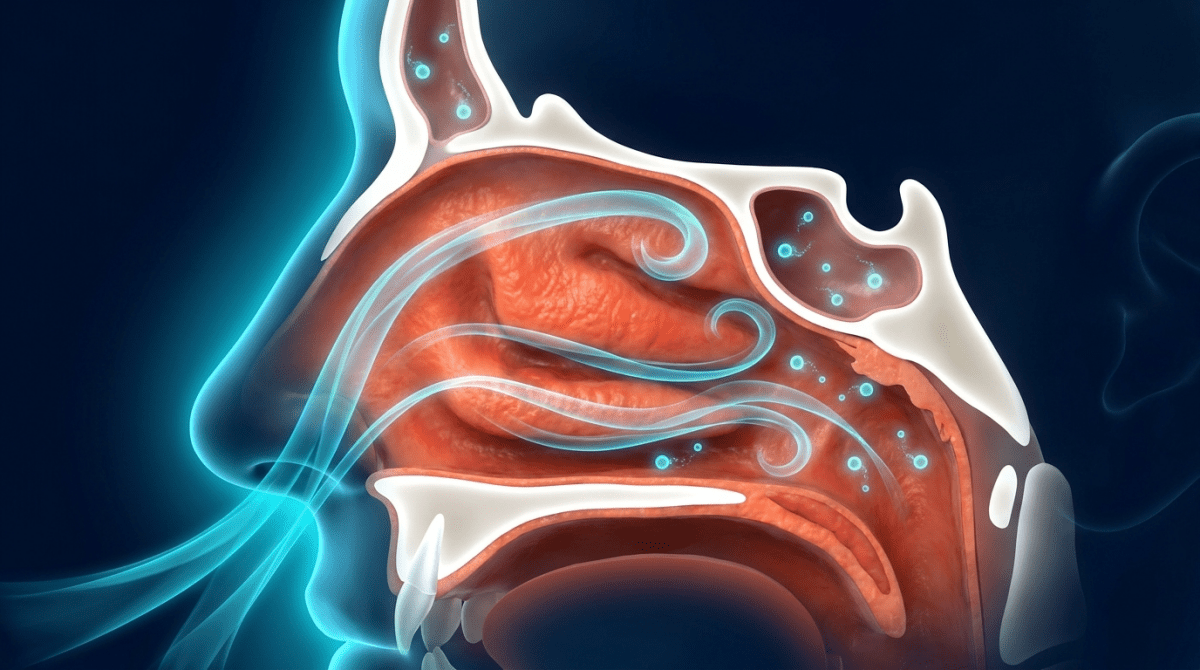
Pranayama meets Buteyko. The two oldest, most refined breathing traditions on earth — ancient Indian yogis and 1950s Soviet sports medicine — arrived at the same conclusion from opposite directions: how you breathe is the most underused performance and longevity lever your body has.
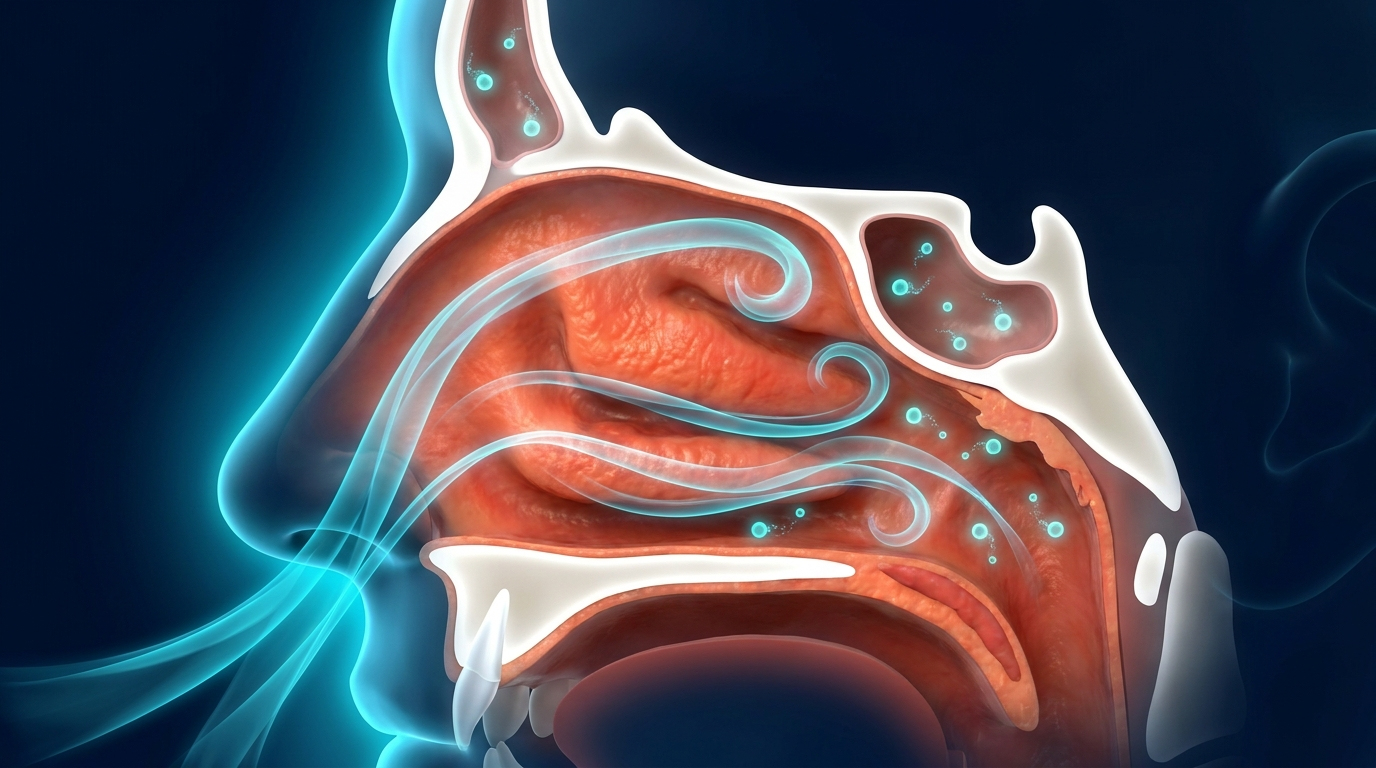
What the yoga tradition got right 2,000 years before science caught up
Pranayama — the breath-control branch of Patanjali's Eight Limbs of Yoga — codified nasal-only breathing as the foundation of every advanced practice. Ujjayi (victorious breath) is nasal-only. Nadi Shodhana (alternate nostril) is nasal-only. The Surya Bhedana and Chandra Bhedana practices that B.K.S. Iyengar taught are nasal-only.
The 19th-century Western yoga teachers who imported these practices kept the technique but lost the mechanism. They taught it as spiritual practice. We now have the physiology to explain why it works: nasal breathing delivers up to 6× more nitric oxide, trains CO₂ tolerance, and produces the cerebral vasodilation that creates the warm, expanded feeling experienced yogis describe in deep practice.
Dr. Konstantin Buteyko in 1950s Russia and Patrick McKeown in The Oxygen Advantage arrived at identical conclusions from sports medicine: train through your nose, train CO₂ tolerance, raise your BOLT score. The protocols converge.
Why nasal breathing transforms your practice
For yoga practitioners specifically, nasal-only breathing during asana and pranayama produces measurable effects within weeks:
Documented in research
- HRV improvement of 10–30% within 4 weeks of consistent slow nasal breathing (multiple Bhavanani et al. studies on yoga practitioners)
- Resting heart rate drops 3–8 bpm over 6 weeks
- Blood pressure reduction of 3–8 mmHg systolic in hypertensive subjects (slow-breathing meta-analyses)
- Vagal tone (parasympathetic activation) measurably higher, leading to faster stress recovery
Reported by experienced practitioners
- Longer, calmer holds in asana — your nervous system doesn't escalate
- Deeper savasana — actual measurable parasympathetic state
- BOLT score gains of 5–15 seconds over 8 weeks (signals real CO₂ tolerance adaptation)
- Cerebral warmth / mild euphoria in long pranayama sessions — the CO₂ cerebral vasodilation effect
The protocol — Pranayama-adapted
Before practice
Apply a Strapflow strip across the bridge of your nose 5 minutes before you step onto the mat. The strip widens the nasal airway physically — important because most of us have slight chronic congestion we don't notice, and any reduction in nasal airflow makes long pranayama sessions feel like work instead of meditation.
During asana practice
- Nasal-only throughout the entire flow. Vinyasa, Ashtanga, Bikram, hot yoga — all of it, nose only.
- If you can't breathe through your nose during a posture, the posture is too intense. Back off. This is the same Zone 2 governor mechanism endurance athletes use — your nose is your effort meter.
- Ujjayi continues throughout. The slight throat constriction of Ujjayi is compatible with the strip and amplifies the warming/grounding effect.
During dedicated pranayama
- Inhale 4, exhale 8. The slow-breathing protocol popularized by James Nestor in Breath. 5 minutes is the minimum to feel the cerebral vasodilation kick in.
- Nadi Shodhana for 10 minutes with the strip on — the strip lets you actually fill each nostril rather than fighting partial blockage.
- Kumbhaka (breath retention) practices become far more accessible with adapted CO₂ tolerance. Track your retention times week over week.
Sleep
Apply a Strapflow strip every night. 8 hours of nasal breathing compounds the cerebral perfusion benefits that 30 minutes of pranayama unlocks acutely. This is non-negotiable for a serious practitioner.
BOLT score — your practice metric
Take Patrick McKeown's BOLT (Body Oxygen Level Test) before you start and every 2 weeks during the protocol. Sit upright, breathe normally through your nose for 2 minutes. After a normal exhale, pinch your nose and time the seconds until the first definite urge to breathe.
- Under 20s: CO₂ tolerance is low, the protocol will move it fast
- 20–40s: typical of regular practitioners
- 40+s: advanced — Olympic distance runners hit this range, as do experienced pranayama practitioners
A 5-second improvement is significant. A 10-second improvement is transformational. Track it.
Common mistakes
- Practicing without the strip. Even mild nasal congestion (which most people have constantly) makes long sessions feel harder than they should. The strip is a $0.60-per-day fix.
- Mouth-breathing during hot yoga. The heat + intensity drives most students to open their mouth. This is exactly when the protocol matters most — slow down, stay nasal.
- Skipping sleep wear. 8 hours of nasal breathing every night is where the long-term parasympathetic adaptation happens.
- No BOLT measurement. Without data, week 2 (when it feels hard) becomes a quitting point. With data, the climbing number keeps you going.
Where Strapflow fits in your practice
You're applying it in two contexts:
Before every practice. Asana, pranayama, meditation. The strip stays on for the duration. Sweat-resistant adhesive that holds through hot yoga, restorative, or 90-minute flows. Designed in matte black — fits the aesthetic, doesn't look medical.
Every night during sleep. The compounding adaptation happens here. Most practitioners report deeper savasana within a week of starting nightly wear, before they've even changed anything in their on-mat practice.
Black 30-Pack — one month of practice and sleep — $17.90 →
FAQ
Will this interfere with Ujjayi? No. The strip widens the nasal airway; Ujjayi is generated at the throat. They're complementary.
Can I wear it during hot yoga / Bikram? Yes. Sweat-resistant adhesive, 12-hour hold.
Does this replace pranayama practice? No. Strapflow is a mechanical assist that makes pranayama physically more accessible. The practice itself is the work.
Is this in line with traditional yoga? The tradition prescribed nasal breathing for thousands of years. Strapflow just makes the prescription easier to follow.
Sources
- B.K.S. Iyengar — Light on Pranayama
- Patrick McKeown — The Oxygen Advantage (2015)
- James Nestor — Breath (2020)
- Bhavanani AB et al. — Multiple studies on yoga and HRV, Journal of Yoga and Physical Therapy
- Lundberg JO et al. — "Inhalation of nasally derived nitric oxide," Acta Physiologica Scandinavica, 1996

Leave a comment
This site is protected by hCaptcha and the hCaptcha Privacy Policy and Terms of Service apply.